How to Organize Linen and Laundry for Multiple Properties

TurnoverPing Team
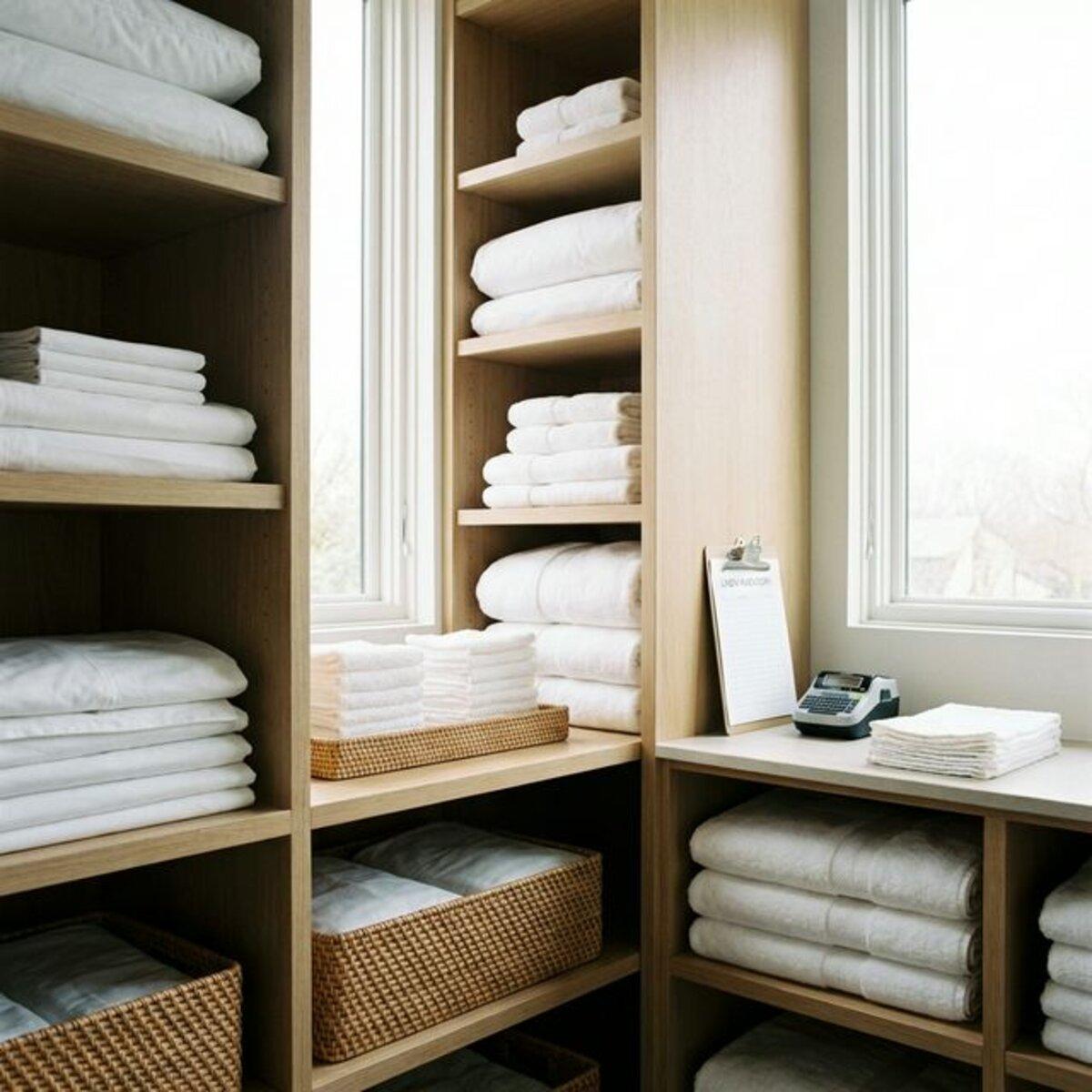
Managing linens for one vacation rental is simple. Keep a few backup sets, wash between guests, and you're done.
Managing linens for multiple properties? That's where hosts start losing sleep. Which property needs restocking? Are there enough backup sheets? Did the cleaners grab the right towels? Why is there never a fitted king sheet when you need one?
Linen chaos is one of the silent killers of efficient multi-property operations. Without a system, you're constantly reacting: running emergency loads, borrowing between properties, or apologizing to guests because something was missed.
This guide covers everything you need to build a bulletproof linen and laundry system across multiple vacation rentals. You'll learn the industry-standard 3-set method, how to choose between in-house and outsourced laundry, and how to track inventory without spreadsheets consuming your life.
Key Takeaways
- ✅ The 3-set system ensures there's always one clean set ready, one being laundered, and one on the bed
- ✅ Standardizing linen types and colors simplifies replacements and mixing between properties
- ✅ Professional laundry services often cost less than in-house operations when factoring in labor and utilities
- ✅ Color-coded bins eliminate confusion during high-turnover days
- ✅ Quarterly inventory audits prevent unexpected shortages mid-season
Build Your Linen Checklist
TurnoverChecklist.com generates free, printable turnover checklists that include linen setup and restocking reminders for each property type.
Why Linen Management Gets Complicated
When you had one property, linens lived in one closet. You knew exactly what was there. Adding more properties multiplies the complexity in unexpected ways.
The Multiplication Problem
A single two-bedroom property might need four sets of sheets and 20 towels. Multiply that by five properties and you're tracking 100 towels across different locations. Some are at the properties, some at the laundry facility, some in transit with cleaners.
Without a tracking system, you lose visibility. Items disappear between properties. Cleaners grab from the wrong stack. You never know if a property is fully stocked until someone checks.
The Timing Challenge
Multiple properties mean multiple turnovers, often on the same day. Peak weekends can have five properties checking out Saturday morning. That's five complete linen sets that need washing, drying, and redistribution before evening check-ins.
If laundry takes four hours per property and you have five properties turning over, the math simply doesn't work with a single washer and dryer. You need a system that accounts for parallel processing or outsourcing.
The Quality Degradation Cycle
Without standards, properties accumulate mismatched linens over time. One property gets the nice new sheets while another hosts guests on faded, pilling fabric. Guest experience becomes inconsistent. Reviews suffer at some properties while others excel.
Consistent linen standards across all properties is a key factor in maintaining good Airbnb cleanliness ratings and guest satisfaction.
Airbnb research shows cleanliness is the number one factor in guest reviews. Poor linen quality directly impacts your star rating, which affects search ranking and booking rates across your entire portfolio.
The 3-Set Linen System Explained
The 3-set system is the industry standard for efficient turnover operations. It eliminates the timing pressure that plagues single-set approaches.
How It Works
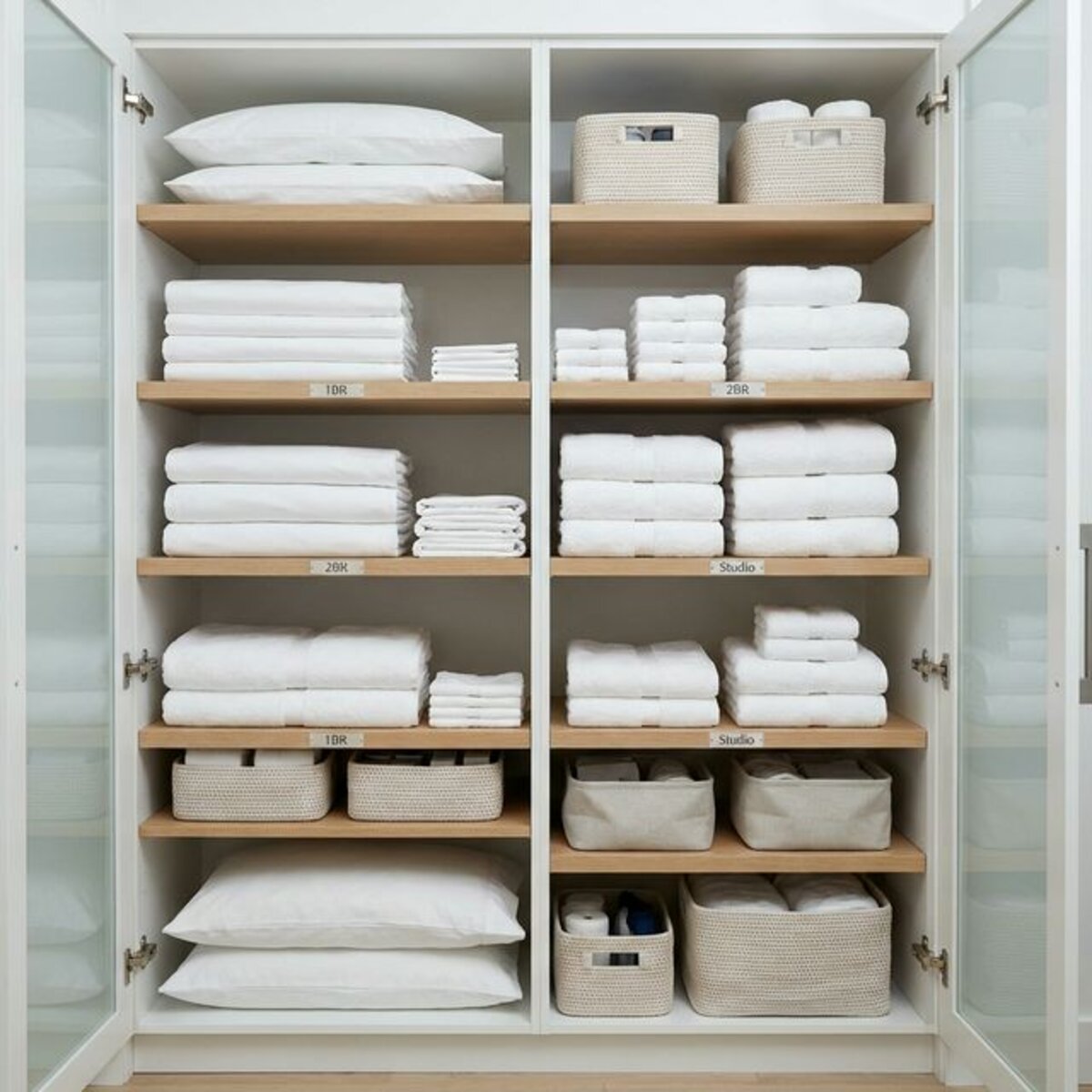
For each bed in each property, maintain three complete sets of linens:
- Set 1: On the bed for current guests
- Set 2: In the laundry being cleaned
- Set 3: In storage ready for immediate deployment
When guests check out, the cleaner strips Set 1 and immediately puts on Set 3. Set 1 goes to laundry and becomes the new Set 2. When Set 2 is clean and folded, it becomes the new Set 3 waiting in storage.
This rotation means cleaners never wait for laundry. Fresh linens are always available at the property. The system creates a continuous flow rather than a bottleneck.
Breaking Down the Math
For a 3-bedroom vacation rental:
- 3 beds Each needing: Fitted sheet, flat sheet, 4 pillowcases
- 3 sets per bed = 9 fitted sheets, 9 flat sheets, 36 pillowcases
- Total linens tracked: 54 pieces just for sleeping linens
Add towels (bath, hand, washcloth for each guest capacity), kitchen towels, and any decorative throws, and inventory grows quickly.
Why 3 Sets Works Better Than 2
With only two sets, every turnover creates a timing crunch. The cleaner strips the bed, does laundry, and waits for drying before making the bed. If the dryer runs slow or laundry backs up, guests arrive before beds are ready.
Three sets build a buffer. Even if laundry is delayed, there's still a clean set pre-staged at the property. The system handles typical delays gracefully.
Training cleaners on proper bed-making techniques, including hotel-style presentation, elevates the guest experience. Combined with quality linens, professional presentation often generates unprompted five-star cleanliness reviews.
Calculating Linen Inventory Per Property
Proper inventory calculation prevents both shortages and expensive over-purchasing.
Bedding Inventory Formula
For each bed, multiply by three (3-set system):
| Item | Per Bed | x3 Sets | Per Property (2 beds) |
|---|---|---|---|
| Fitted sheet | 1 | 3 | 6 |
| Flat sheet | 1 | 3 | 6 |
| Pillowcases | 2 | 6 | 12 |
| Duvet cover | 1 | 3 | 6 |
| Mattress protector | 1 | 2* | 4 |
*Mattress protectors need fewer backups since they don't always require washing between guests.
Towel Inventory Formula
Base towel counts on maximum guest capacity:
| Towel Type | Per Guest | Backup Multiplier | Per Property (4 guests) |
|---|---|---|---|
| Bath towel | 2 | x2 | 16 |
| Hand towel | 1 | x2 | 8 |
| Washcloth | 1 | x2 | 8 |
| Bath mat | 1 per bathroom | x2 | varies |
Kitchen and Utility Linens
Often overlooked, these need tracking too:
- Kitchen towels: 4 per property, with 4 backups
- Dishcloths: 4 per property, with 4 backups
- Oven mitts: 1 set per property (rarely need backups)
- Pot holders: 2 per property (rarely need backups)
Decorative Items
Throws, accent pillows, and bed runners wear out slower but need eventual replacement:
- Throw blankets: 1 per seating area, with 1 backup per 3 properties
- Decorative pillows: Washable covers in 2 sets per property
Coordinate Multiple Property Turnovers
TurnoverPing automatically notifies cleaners when turnovers are scheduled. Perfect for coordinating linen pickups and deliveries across your portfolio.
In-House vs Professional Laundry Services
Every host managing multiple properties faces this decision. The right answer depends on your volume, location, and available time.
In-House Laundry: Pros and Cons
Advantages:
- Complete control over timing and quality
- Lower per-load cost if equipment is already paid for
- No waiting on external service schedules
- Works for same-day urgent turnovers
Disadvantages:
- Your time (or staff time) has value
- Equipment maintenance and replacement costs
- Utility costs add up significantly at scale
- Storage space for machines and folding area needed
Professional Laundry Services: Pros and Cons
Advantages:
- Free up hours every week
- Commercial equipment produces better results
- Predictable per-item pricing
- No equipment maintenance or utility costs
- Often includes pickup and delivery
Disadvantages:
- Less flexibility for last-minute requests
- Quality may vary between services
- Turnaround time adds buffer requirements
- Ongoing cost even during slow seasons
The Breakeven Calculation
Most hosts find professional services become cost-effective around 3 to 5 properties. Here's a simplified analysis:
In-House Costs (per property, per month):
- Water and electricity: $40 to $60
- Detergent and supplies: $15 to $25
- Labor time (3 hours/week at $25/hr): $300
- Equipment depreciation: $20 to $40
- Total: ~$375 to $425/month
Professional Service Costs:
- Per-turnover pricing: $30 to $50 per set
- Average 8 turnovers/month: $240 to $400
- Total: ~$240 to $400/month
The numbers often favor outsourcing when labor costs are included honestly.
According to Airbnb's hosting resources, factoring all operational costs including laundry into your cleaning fee ensures sustainable operations.
Hybrid Approach
Many hosts use a combination:
- Regular turnovers: Professional service handles standard volume
- Same-day emergencies: In-house backup for urgent situations
- Deep cleans: Professional service for seasonal deep laundering of duvets and mattress pads
This approach captures efficiency at scale while maintaining flexibility.
Color-Coded Workflow System
Visual systems reduce errors and speed up turnover operations.
The 3-Bin System
Implement color-coded bins or bags at each property:
- White bin: Clean, ready to use
- Gray bin: In transit or being laundered
- Dark bin: Dirty, needs processing
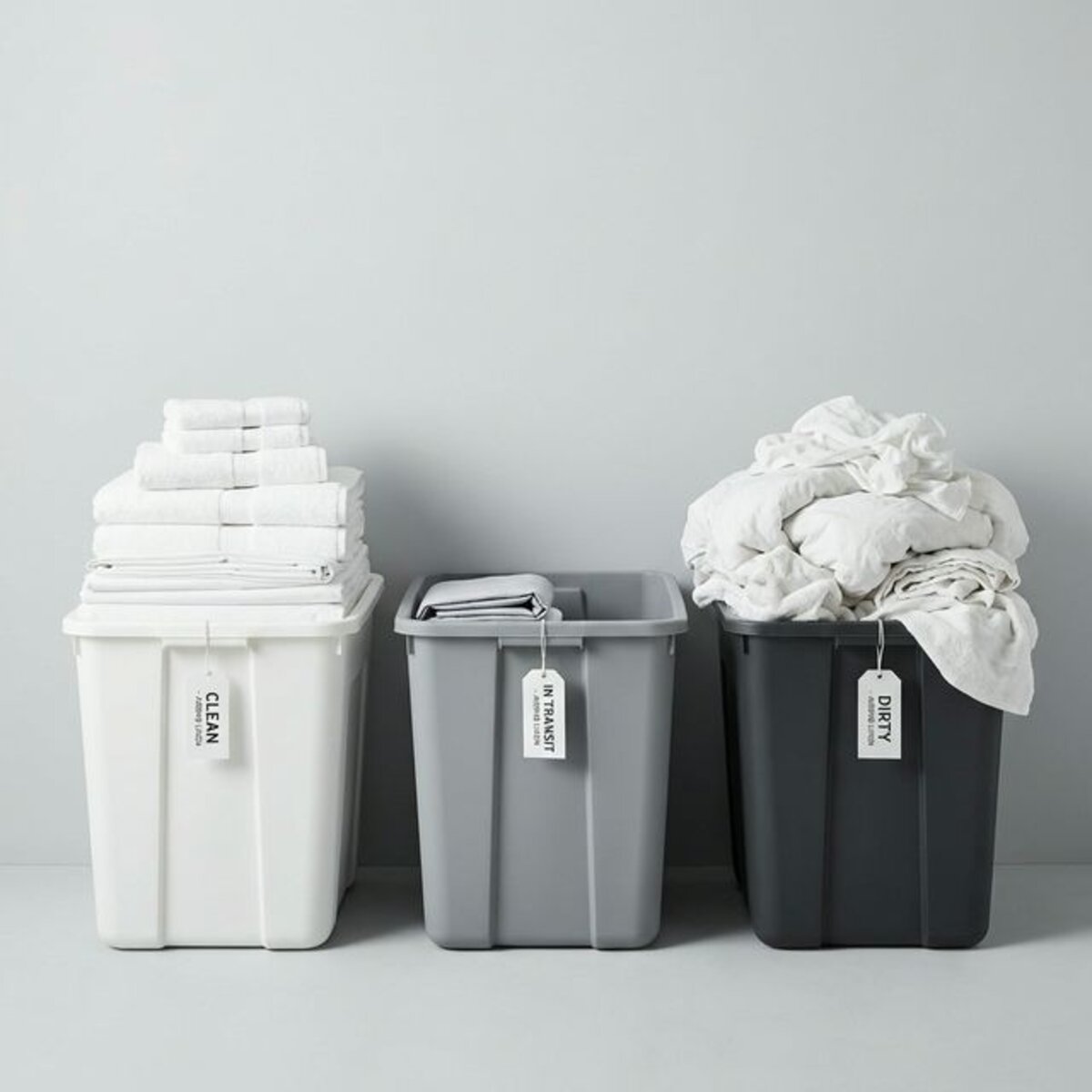
Cleaners learn instantly what goes where. No confusion. No mixing clean with dirty.
Implementing at Scale
For multiple properties:
- Purchase identical bins for every property
- Label clearly with property name or number
- Train all cleaners on the system during onboarding
- Include in your turnover checklist as a verification step
The best cleaner communication templates reinforce these systems with clear written instructions.
Transit Considerations
When linens travel between properties and a central laundry location:
- Use sealed bags to clearly separate dirty from clean during transport
- Create a central inventory at your laundry facility
- Schedule dedicated pickup routes to minimize driving
Never transport dirty and clean linens together in the same vehicle space, even if bagged. One leak or bag failure and your clean linens need rewashing. Keep them physically separated.
Tracking Inventory Across Properties
Without tracking, inventory slowly vanishes. Items get lost, damaged, or borrowed permanently.
Simple Tracking Methods
Method 1: Property Inventory Sheet
Create a physical checklist at each property listing expected inventory:
- Posted inside a utility closet
- Cleaners verify count after each turnover
- Variances reported immediately
Method 2: Spreadsheet Tracking
Maintain a shared spreadsheet with:
- Columns for each property
- Rows for each linen type
- Running count updated after turnovers
- Reorder thresholds highlighted
Method 3: Property Management Integration
Some property management systems include inventory modules. If you're already using a PMS, check for this functionality before building separate systems.
Quarterly Audit Process
Every three months, do a full physical count:
- Schedule during a slow booking period
- Count every item at every property
- Check condition, not just quantity
- Replace worn items immediately
- Reconcile counts with tracking system
- Update reorder thresholds if needed
Setting Reorder Alerts
Know your lead times for replacement orders:
- Standard linens: Often 3 to 7 days delivery
- Custom or branded items: May require 2 to 4 weeks
- Peak season: Order early before summer and holiday demand
Set reorder points to allow for delays plus one extra turnover cycle.
Standardization Strategies
Standardizing across properties simplifies every aspect of linen management.
Why Same-Type Linens Win
When every property uses identical sheets:
- Any backup fits anywhere
- Bulk purchasing reduces costs
- Cleaners never grab the wrong size
- Washing protocols stay consistent
- Inventory counts are simpler
Choosing Universal Standards
Select linens that work across your portfolio:
Sheets:
- White or off-white (stains show and get treated, looks clean)
- Cotton or cotton-blend for durability
- 300+ thread count minimum
- Deep pocket fitted sheets (work on various mattress depths)
Towels:
- White or off-white (bleachable, shows cleanliness)
- Medium weight (dries faster than heavy)
- Standard sizes across all properties
Exception Properties: Some luxury or uniquely themed properties may need specific linens. Track these separately and order dedicated backups.
Building a Central Reserve
Maintain a central inventory of backup linens:
- Location: Your laundry facility or a dedicated storage area
- Quantity: 1 complete set per 3 to 4 properties
- Access: Available within 30 minutes for emergencies
- Rotation: Use these during quarterly deep cleans to maintain freshness
The same-day turnover strategies often rely on having these reserves available.
Sustainable Practices
Modern hosts increasingly consider environmental impact in operations.
Reducing Laundry Volume
Small changes reduce water and energy consumption:
- Guest guidance: Encourage reuse of towels during multi-night stays
- Smart washing: Full loads only, avoid partial washes
- Efficient equipment: Front-load washers use less water
- Line drying: When weather and time permit
Eco-Friendly Products
Consider switching to:
- Biodegradable detergents
- Fragrance-free options (also reduces allergen complaints)
- Concentrated formulas (less packaging waste)
Linen Lifecycle Management
When linens retire from guest service:
- Donate: Local shelters often accept gently used items
- Repurpose: Convert to cleaning rags internally
- Recycle: Textile recycling programs exist in many areas
Common Mistakes to Avoid
Learn from what trips up other hosts.
Mistake 1: Underbuying Initially
Starting with minimal inventory creates constant stress. It's better to slightly overbuy and have excess than to scramble for every turnover. The 3-set minimum exists for a reason.
Mistake 2: Mixing Linen Ages
That "new set" syndrome where new linens go to certain properties while others get older stock creates inconsistent guest experience. Rotate new purchases across properties evenly.
Mistake 3: Poor Storage Conditions
Linens stored in damp basements or direct sunlight degrade quickly. Keep storage areas:
- Climate controlled
- Away from direct light
- Protected from pests
- Well ventilated
Mistake 4: No Damage Tracking
When guests damage linens, document immediately:
- Take photos
- Log in your damage record
- Replace before next guest
- Claim through guest insurance if significant
Without documentation, damage claims fail and your investment slowly depletes.
Mistake 5: Ignoring Laundry Training
Cleaners often default to home laundry practices. Commercial-volume operations need specific training:
- Proper load sizes
- Correct temperature settings
- Appropriate products
- Stain treatment protocols
Include laundry expectations in your cleaner onboarding process.
Conclusion
Linen management across multiple properties requires intentional systems. The 3-set rotation ensures availability. Standardization simplifies logistics. Tracking prevents shortages. Whether you handle laundry in-house or outsource to professionals, the underlying principles remain the same.
Build these systems before you need them. A host who scales from 3 to 10 properties with solid linen infrastructure barely notices the growth. A host who adds properties without systems spends weekends doing emergency laundry runs.
Your linens touch every guest who stays in your rentals. Getting this right impacts reviews, operational efficiency, and your own quality of life as a host.
Frequently Asked Questions
How many sets of linens do I need per vacation rental property?
Should I use a professional laundry service or do laundry in-house?
What's the best way to track linen inventory across multiple properties?
Why do hosts recommend white linens for vacation rentals?
How can I automate my turnover operations beyond just linen management?
What should I do when a cleaner reports damaged or stained linens?
Automate Turnover Coordination
TurnoverPing syncs with your Airbnb, VRBO, and Booking.com calendars. When check-outs happen, cleaners get notified automatically. Get confirmation tracking, backup cleaner support, and zero manual scheduling.
Related Articles

Airbnb Cleaning Checklist for Small Studios and Tiny Spaces
Master the art of cleaning compact vacation rentals. This checklist covers studio apartments, tiny homes, and small spaces where every minute and every square foot counts.

Best Practices for Sharing Calendar Access with Your Cleaners
Discover the safest, most effective ways to share your Airbnb, VRBO, and Booking.com calendars with your cleaning team. Stop micromanaging and start automating.

Handling Last-Minute Bookings Without Stressing Your Cleaners
Last-minute Airbnb bookings are revenue gold, but they can destroy your cleaner relationships. Learn how to accept short-notice turnovers while keeping your cleaning team happy and your properties ready.